

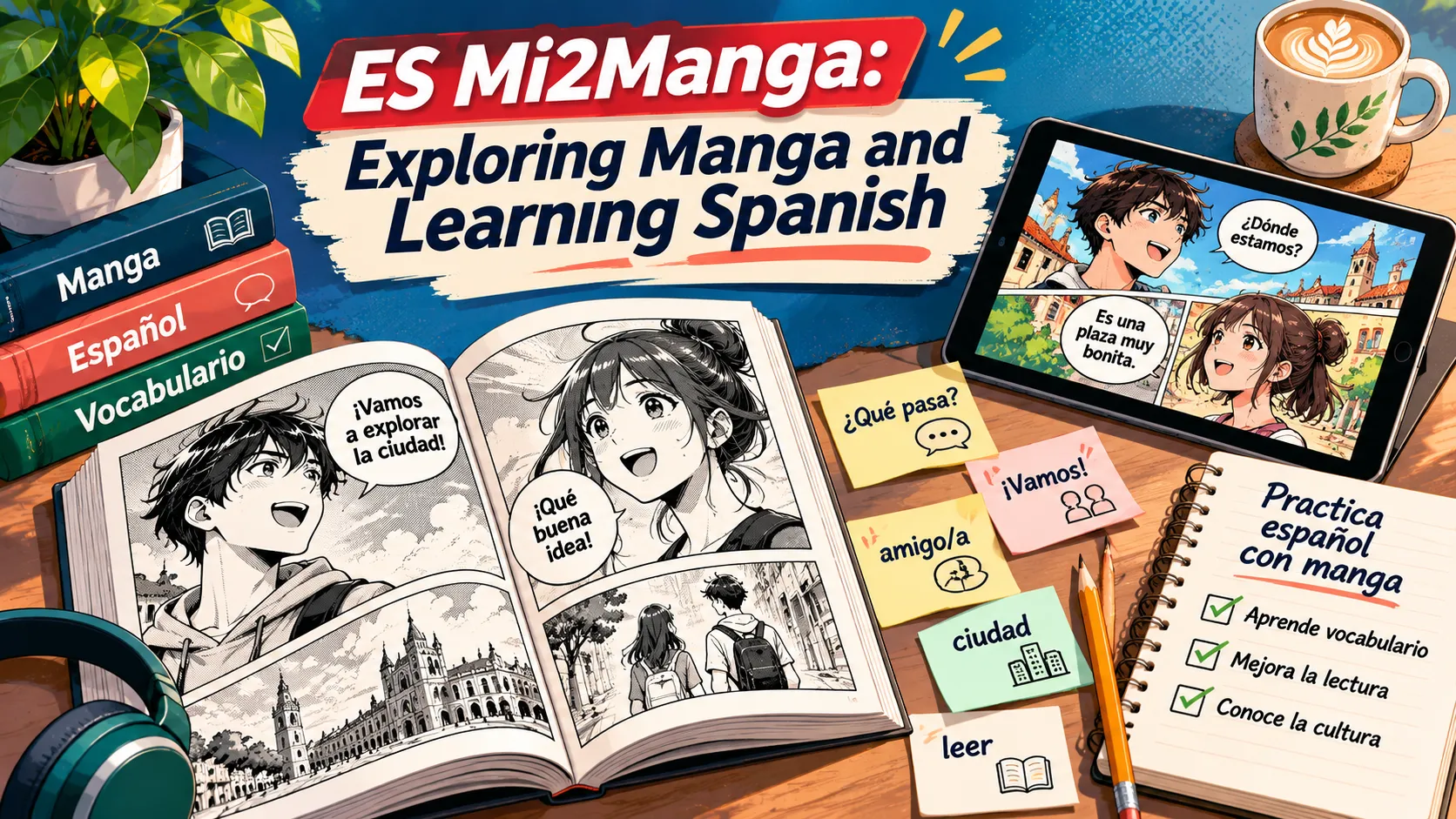
ES Mi2Manga is associated with an online comic catalog focused on Spanish translations of Japanese manga, Korean manhwa, and other Asian illustrated stories. Its previously indexed pages appeared under the Lectormanga name, featuring series descriptions, chapter listings, and genre categories.
Although most readers search for Mi2Manga for entertainment, Spanish-language comics can also introduce people to unfamiliar expressions, conversational vocabulary, and different storytelling traditions.
The platform’s uncertain availability and licensing arrangements make it worth examining alongside established comic publishers and the wider benefits of reading manga in Spanish.
What Is ES Mi2Manga?
ES Mi2Manga generally refers to the website associated with es.mi2manga.com. The letters ES indicate its Spanish-language focus, distinguishing it from comic-reading services intended for other language audiences.
Previously indexed pages included romance, fantasy, action, drama, and Korean webcomics. Readers could discover stories through individual series listings containing information about characters, creators, alternative titles, and available chapters.
According to a November 23, 2026, ES Mi2Manga report published by Trustify News, an indexed archive contained approximately 7,500 catalog entries. However, that figure represents a search-engine snapshot rather than a confirmed number of currently readable stories.
During an access check on November 24, 2026, the associated website returned a 502 Bad Gateway error. Its permanent closure has not been confirmed, but its full catalog and reading features could not be independently examined.
Why Manga Appeals to Spanish-Speaking Audiences
A good comic can communicate a surprising amount of information without using many words.
Facial expressions, changes in body language, carefully arranged illustrations, and short exchanges between characters often reveal more than lengthy descriptions.
That combination makes manga accessible to readers who might otherwise struggle with a traditional novel.
For Spanish-speaking audiences, translated editions remove an additional barrier. Readers can enjoy Japanese and Korean stories without needing to understand their original languages.
The appeal also extends beyond entertainment. Someone learning Spanish can use illustrated stories to become more familiar with everyday vocabulary in a setting that provides visual clues.
A dramatic conversation between two characters, for instance, may introduce expressions of surprise, frustration, affection, or disagreement. The accompanying illustrations help explain the emotional meaning behind those words.
Can Reading Manga Help You Learn Spanish?
Reading Spanish manga can be a useful part of language practice, particularly for learners who already enjoy comics.
A 2025 meta-analysis published in Educational Psychology Review examined the effects of extensive reading on second-language and foreign-language learning.
The researchers found positive results across several areas, including vocabulary development, reading comprehension, fluency, motivation, and broader language proficiency.
The research was not specifically about Mi2Manga, and it does not establish that reading comics alone will make someone fluent. Nevertheless, it supports the broader value of regular reading as part of language learning.
Comics offer several practical advantages in this context.
Pictures Provide Context
Consider a panel showing a character running toward a railway station while another character shouts, “¡Date prisa!”
Even without knowing the phrase, a reader may recognize from the scene that someone is being told to hurry.
The artwork provides context that makes unfamiliar expressions easier to interpret.
Conversations Introduce Everyday Expressions
Traditional language textbooks often present vocabulary in organized lessons. Manga introduces many expressions through conversations between characters.
Readers may encounter greetings, apologies, invitations, disagreements, and informal questions.
These exchanges can help learners understand how familiar words appear in different situations.
Continuing Stories Encourage Regular Reading
An interesting storyline gives readers a reason to return.
Following a series over several weeks also creates opportunities to encounter recurring words, character relationships, and familiar sentence structures.
However, reading should complement speaking, listening, and formal language practice rather than replace them entirely.
Useful Spanish Expressions Found in Comics
Spanish-language manga frequently contains short conversational expressions that are easy to understand and remember.
The following examples illustrate the kinds of phrases a learner might encounter in translated comics. They are general language examples rather than quotations from the Mi2Manga catalog.
| Spanish expression | English meaning | Typical situation |
|---|---|---|
| ¿Qué pasa? | What’s happening? | Asking about a situation |
| No te preocupes | Don’t worry | Reassuring someone |
| ¡Ten cuidado! | Be careful! | Warning another character |
| ¿En serio? | Seriously? | Expressing surprise |
| Lo siento | I’m sorry | Apologizing |
| No puede ser | It can’t be | Expressing disbelief |
| ¡Vamos! | Let’s go! | Encouraging someone |
| Hasta mañana | See you tomorrow | Saying goodbye |
The meaning of an expression can change slightly depending on the situation.
For example, “¡Vamos!” can express encouragement during a competition, impatience when someone is moving slowly, or excitement after a successful event.
Understanding these differences is one benefit of encountering language through stories rather than memorizing isolated words.
Choosing the Right Manga for Your Reading Level
Not every comic is equally suitable for a Spanish learner.
A fantasy story containing complicated political conflicts, historical terminology, and supernatural concepts may be difficult for someone who has only recently started studying the language.
A simpler story about friendship, family life, or school experiences may be considerably easier to follow.
Beginner readers can start with short episodes, familiar situations, and stories containing relatively little dialogue.
Intermediate readers may enjoy romance, comedy, adventure, and longer conversations involving everyday problems.
Advanced readers can explore historical fiction, psychological thrillers, political drama, and stories with more complicated vocabulary.
The ideal comic should be interesting enough to encourage continued reading without requiring a dictionary for nearly every sentence.
Previously indexed Mi2Manga listings covered different genres and storytelling styles. This Orbit News overview of ES Mi2Manga provides additional details about its catalog organization and content categories.
Readers should also check age ratings, since some comics contain material intended for mature audiences.
Also Read: TempleScan and Spanish-Language Digital Comics
Spanish From Spain and Latin America: Why Translations Differ
Someone who reads several Spanish-language manga editions may notice that similar conversations sometimes use different words.
Spanish varies across countries and regions. A translator working for a publisher in Spain may choose expressions that differ from those used by a publisher serving Latin American audiences.
For example, the word ordenador is commonly used for a computer in Spain, while computadora is widely used in Latin America.
Similarly, móvil and celular can both refer to a mobile phone, depending on the region.
Neither expression is necessarily incorrect. They reflect different language conventions.
These differences can extend to humor, informal greetings, insults, and expressions of affection.
For language learners, reading material from several regions can help build a broader understanding of Spanish. However, readers should remember that fictional dialogue may contain exaggerated expressions, outdated language, or vocabulary unsuitable for formal situations.
A Simple Manga Reading Routine for Learning Spanish
Turning comic reading into useful language practice does not require complicated lessons.
A manageable routine might involve spending 15 to 20 minutes reading a short chapter or episode.
During the first reading, concentrate on understanding the story rather than translating every unfamiliar expression. Use the artwork and surrounding conversation to estimate what the characters mean.
After finishing, return to a few words or phrases that seemed particularly important.
Write them down with a short example sentence. This creates a more meaningful record than simply copying dictionary definitions.
Finally, try describing what happened in the chapter using your own Spanish sentences.
For example, a learner might summarize a fictional school scene as:
“La chica llegó tarde a clase porque perdió el autobús.”
The sentence means that the girl arrived late to class because she missed the bus.
This type of exercise encourages readers to move beyond recognition and begin using the language themselves.
The goal is not to turn every entertaining comic into homework. A sustainable routine should leave enough room to enjoy the story.
Are All Spanish Manga Translations Reliable?
Translation quality can vary considerably between publishers, websites, and individual releases.
Some translations communicate the original dialogue naturally, while others may contain spelling mistakes, inconsistent terminology, or awkward sentence structures.
Unofficial fan translations can also differ in accuracy.
For language learners, these inconsistencies matter because repeatedly encountering incorrect grammar or unnatural expressions can create confusion.
Professional localization generally involves translation, editing, lettering, and editorial review. Although official editions are not necessarily perfect, their publishers and production arrangements are usually easier to identify.
Mi2Manga’s complete licensing and translation arrangements remain unverified. There is therefore insufficient evidence to establish that every previously listed comic was professionally translated or distributed with permission.
Readers interested in evaluating unfamiliar online services can find related website and technology coverage through Trustify News.
Official Platforms for Reading Comics in Spanish
Readers looking for dependable alternatives to ES Mi2Manga can choose from established publishing services.
MANGA Plus by SHUEISHA
MANGA Plus is an official manga service operated by Japanese publisher Shueisha.
It offers selected comics in Spanish and other languages. Readers can adjust their preferred content languages through the application’s settings.
Its multilingual options are particularly useful for language learners because some titles are available in both English and Spanish.
Reading an authorized Spanish edition and comparing difficult passages with an available English edition can help clarify unfamiliar vocabulary.
Availability varies by title and region, so readers should not assume that every series has identical language options.
WEBTOON en Español
WEBTOON en Español provides digital comics covering romance, fantasy, comedy, action, suspense, and everyday life.
Its Spanish-language homepage includes a category called Vida cotidiana, meaning everyday life. Stories in this category can be a useful starting point for readers interested in ordinary conversations and familiar situations.
Many WEBTOON publications use vertically arranged illustrations designed for smartphones.
This format can make short reading sessions convenient, particularly for people who prefer reading a few scenes at a time.
What Makes an Online Comic Platform Worth Using?
An extensive collection is attractive, but the number of available stories should not be the only factor when choosing a reading service.
Reliable platforms also need readable translations, clearly organized chapters, understandable content ratings, accessible interfaces, and transparent publishing arrangements.
For someone learning Spanish, additional considerations include text clarity, appropriate vocabulary difficulty, and the availability of alternative language editions.
A smaller catalog containing high-quality authorized translations may provide a better experience than a much larger collection with uncertain origins.
ES Mi2Manga’s previously indexed pages demonstrate the demand for translated comics, but its current technical accessibility and distribution rights remain unclear.
Official publishers offer readers a more transparent foundation for enjoying comics and supporting their creators.
Frequently Asked Questions
Is ES Mi2Manga a Spanish-language website?
Yes. Its associated website and previously indexed comic listings primarily target readers interested in Spanish translations of manga and manhwa.
Can beginners learn Spanish by reading manga?
Manga can support vocabulary development and reading comprehension. Beginners should choose relatively simple stories and combine comic reading with other language-learning activities.
Does ES Mi2Manga provide official translations?
Its complete translation and licensing arrangements have not been independently established. Readers should not assume that every listed publication is officially authorized.
Is ES Mi2Manga currently working?
Its associated website returned a 502 Bad Gateway error on November 24, 2026. No permanent closure or restoration date has been confirmed.
Which official manga platform supports Spanish?
MANGA Plus by SHUEISHA offers selected Spanish-language manga, while WEBTOON en Español provides a wide range of digital comics in Spanish.
Can reading manga replace Spanish language classes?
No. Comics can complement language learning, but speaking practice, listening exercises, grammar instruction, and real conversations remain valuable.
Sources
- Trustify News: ES Mi2Manga, Website Background and Catalog Information
- Orbit News: ES Mi2Manga, Reading Features and Safety
