

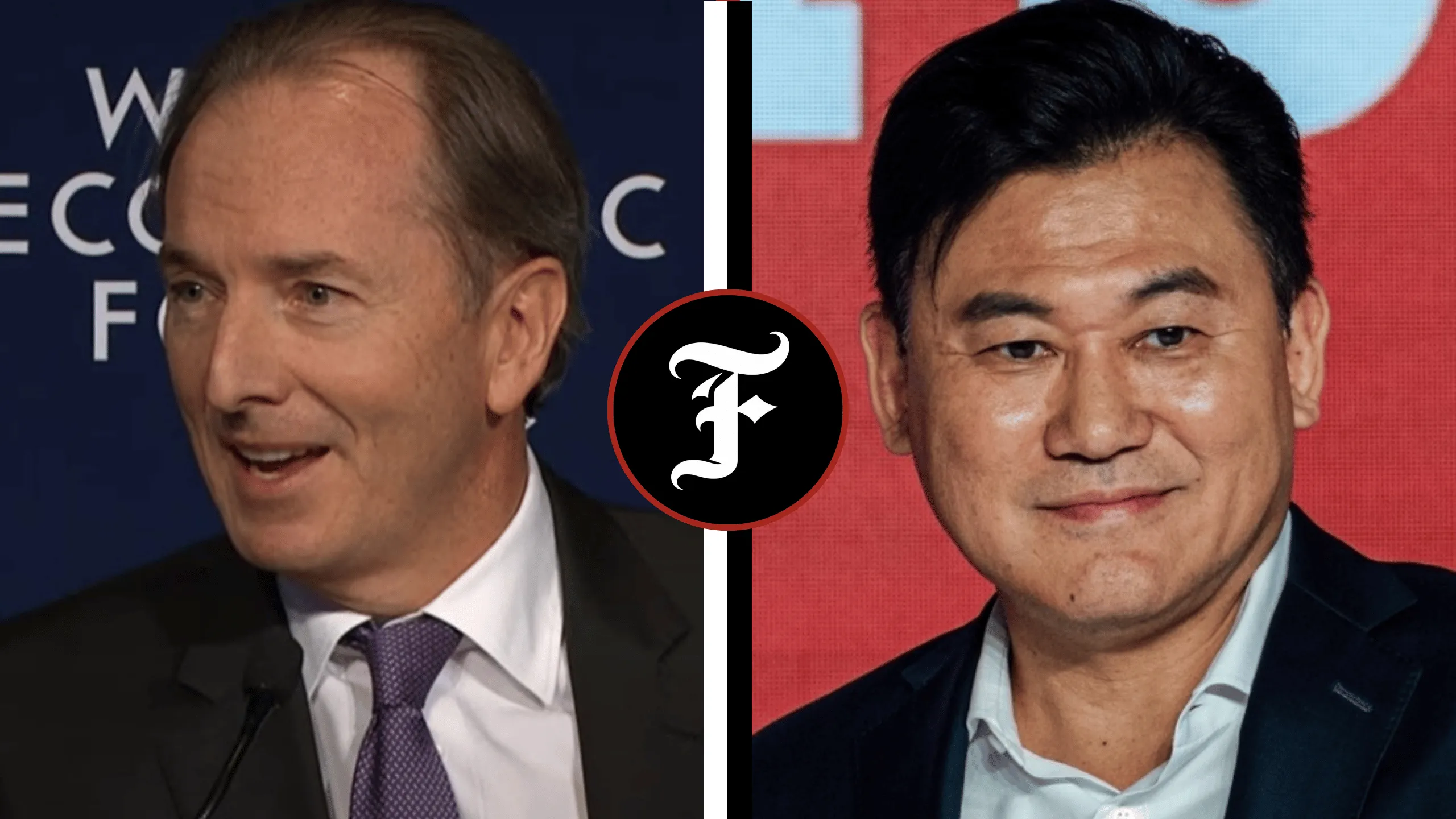
Hiroshi Mikitani and James Gorman are prominent global business leaders, but there is no verified evidence that they have a direct personal partnership, joint investment, board relationship, or other formal one-to-one business arrangement. The clearest documented connection is institutional: companies within the Morgan Stanley network have participated in financing, securities, research, and advisory work involving Hiroshi Mikitani’s Rakuten Group.
That distinction matters. Mikitani remains the founder, chairman, president and CEO of Rakuten Group, while Gorman is no longer an executive at Morgan Stanley. As of 2026, Gorman is chairman of The Walt Disney Company, chairman emeritus of Morgan Stanley, and a senior advisor to General Atlantic.
Are Hiroshi Mikitani and James Gorman directly connected?
No credible public record reviewed for this article establishes a direct personal business relationship between Mikitani and Gorman. They do not appear together as co-founders, directors, business partners, or executives of the same company.
There is, however, a meaningful corporate-level connection between Rakuten and Morgan Stanley. Morgan Stanley entities have been involved in Rakuten capital-markets transactions, while Mitsubishi UFJ Morgan Stanley Securities, a securities joint venture connected to Morgan Stanley, has provided financial services to Rakuten.
This should not be interpreted as proof that Mikitani and Gorman personally negotiated or managed those transactions. Public corporate announcements name the institutions involved but do not establish direct participation by the two executives themselves.
Who is Hiroshi Mikitani?
Hiroshi “Mickey” Mikitani is the founder of Rakuten Group, one of Japan’s major internet and technology groups. Rakuten’s official management information lists him in 2026 as Representative Director, Chairman, President and CEO, as well as leader of the company’s Internet Services segment.
Mikitani was born on March 11, 1965. He joined the Industrial Bank of Japan, now part of Mizuho Bank, in 1988 and received an MBA from Harvard Business School in 1993. He founded the business that became Rakuten in 1997.
His early banking experience is important to his career story. Rather than beginning as a technologist, Mikitani entered business through finance before moving into entrepreneurship. Rakuten subsequently expanded from its original online marketplace into areas including e-commerce, travel, digital content, banking, securities, mobile communications and professional sports.
Mikitani also continues to hold a significant financial interest in the company he founded. Rakuten reported that he personally owned 176,703,400 shares, or 8.14% of the company, as of December 31, 2025. Crimson Group, LLC, another major shareholder associated with Mikitani, held 10.43%.
Who is James Gorman?
James P. Gorman is a longtime financial-services executive best known for leading Morgan Stanley. He served as the firm’s CEO from January 2010 through December 2023 and as chairman from 2012 through 2023. He then served as executive chairman during 2024 before becoming chairman emeritus in January 2025.
Before Morgan Stanley, Gorman held senior positions at Merrill Lynch, worked as a senior partner at McKinsey & Company and began his career as a lawyer in Australia. He earned undergraduate and law degrees from the University of Melbourne and an MBA from Columbia University.
His post-Morgan Stanley career remains substantial. The Walt Disney Company lists Gorman as chairman of the board, a position he assumed in January 2025. General Atlantic also appointed him as a senior advisor in April 2025, where his role includes advising on enterprise strategy and growth initiatives.
Gorman therefore should not be described as Morgan Stanley’s current CEO or executive chairman. Morgan Stanley announced that Ted Pick would become chairman effective January 1, 2025, while Gorman retired from employment at the firm.
Also Read: Safra Catz and John Stankey: Careers and Business Connection
Where Rakuten and Morgan Stanley actually overlap
The strongest factual explanation for why Hiroshi Mikitani and James Gorman may appear together in searches is the long-running interaction between Rakuten and the financial institutions associated with Morgan Stanley.
Morgan Stanley expanded its Japanese presence under Gorman
One important part of the background dates to 2010, shortly after Gorman became Morgan Stanley’s CEO. Morgan Stanley and Mitsubishi UFJ Financial Group finalized agreements to establish their Japanese securities joint venture.
The arrangement created Mitsubishi UFJ Morgan Stanley Securities and Morgan Stanley MUFG Securities. In the March 2010 announcement, Gorman, then Morgan Stanley’s president and CEO, publicly emphasized the firm’s commitment to Japan and the strategic alliance with MUFG.
The partnership remains active. Morgan Stanley’s current Japanese corporate structure states that Mitsubishi UFJ Morgan Stanley Securities is 40% owned economically and through voting rights by Morgan Stanley, with MUFG holding 60%. Morgan Stanley MUFG Securities has a different voting structure, with Morgan Stanley controlling 51% of voting rights.
That institutional network later became relevant to Rakuten transactions.
Morgan Stanley participated in Rakuten’s 2024 debt transaction
In January and February 2024, Rakuten conducted cash tender offers for U.S.-dollar senior notes. Rakuten’s official announcements named Morgan Stanley & Co. LLC alongside Goldman Sachs, Daiwa Capital Markets America and Mizuho Securities USA as dealer managers.
Gorman was Morgan Stanley’s executive chairman at the time, having stepped down as CEO at the end of 2023. That timing creates an organizational overlap between his Morgan Stanley tenure and a documented Rakuten transaction.
It does not, however, prove that Gorman personally advised Mikitani. Dealer-manager work is normally carried out by specialist investment-banking and capital-markets teams, and Rakuten’s announcement does not identify Gorman as an individual participant.
Morgan Stanley-linked firms continued working with Rakuten after Gorman left
The institutional relationship did not end with Gorman’s retirement from Morgan Stanley.
In 2025, Mitsubishi UFJ Morgan Stanley Securities was among the lead managers for Rakuten Group’s inaugural sustainability bonds. Rakuten said proceeds from the planned ¥10 billion three-year and ¥10 billion five-year bonds were intended for investments related to 5G.
An even clearer example appeared in May 2026. During Rakuten’s planned reorganization of its fintech businesses, Rakuten Group appointed Mitsubishi UFJ Morgan Stanley Securities and BofA Securities Japan as financial advisers and obtained valuation work relating to the proposed share deliveries.
Because Gorman had already retired from Morgan Stanley employment at the end of 2024, this 2026 transaction is especially useful in separating the institutional connection from the personal one. Rakuten’s dealings with Morgan Stanley-linked businesses continued independently of Gorman.
Hiroshi Mikitani vs. James Gorman
| Fact | Hiroshi Mikitani | James Gorman |
|---|---|---|
| Main career identity | Founder and CEO of Rakuten Group | Former CEO and chairman of Morgan Stanley |
| Current major role in 2026 | Chairman, President and CEO of Rakuten Group | Chairman of The Walt Disney Company |
| Career background | Banking and entrepreneurship | Law, consulting, wealth management and banking |
| MBA | Harvard Business School | Columbia Business School |
| Major company-building role | Built Rakuten from a startup into a diversified technology and services group | Led Morgan Stanley through a major expansion of wealth and asset management |
| Current Morgan Stanley role | None | Chairman Emeritus |
| Documented direct partnership with the other person | None found | None found |
Mikitani’s profile is primarily that of a founder-owner and operating executive. Gorman’s career has instead centered on managing established global financial institutions and, more recently, corporate governance and advisory roles.
What the two executives do have in common
Despite their different careers, there are several factual points of overlap.
Both have extensive experience with global finance. Mikitani began his career at the Industrial Bank of Japan before becoming an entrepreneur, while Gorman spent decades in banking, wealth management and financial-services leadership.
Both also operate or have operated at the intersection of domestic institutions and international markets. Rakuten combines Japanese consumer businesses with international technology, communications and financial activities. Gorman led Morgan Stanley while the firm strengthened its Japanese operations through its alliance with MUFG.
There is another practical point of intersection: capital markets. Rakuten periodically needs banks, securities firms and advisers to handle debt offerings, valuations and other financial transactions. Morgan Stanley and its Japanese joint ventures provide exactly those types of services.
That business compatibility explains documented interactions between their organizations far better than claims of an undisclosed personal partnership.
Does Morgan Stanley own part of Rakuten?
Public shareholder records need to be interpreted carefully.
Rakuten’s shareholder disclosure as of December 31, 2025 listed MSIP CLIENT SECURITIES with 81,941,532 shares, equivalent to 3.78% of outstanding shares.
A securities or client-account entry does not automatically mean that Morgan Stanley itself beneficially owns those shares for its own corporate account. Such entities may hold securities on behalf of clients, counterparties or other beneficial owners.
For that reason, the shareholder entry should not be described as proof that James Gorman, personally, invested in Rakuten.
Is there evidence that Mikitani and Gorman are friends or business partners?
No authoritative source located for this article confirms a personal friendship or formal business partnership between them.
There are credible records connecting Rakuten with Morgan Stanley and Morgan Stanley-related Japanese securities businesses, but corporate relationships are not interchangeable with personal relationships between chief executives.
This distinction is especially important with search terms that simply combine two famous names. Search results can create the impression of a relationship even when the available primary evidence supports only indirect institutional overlap.
Why their names can reasonably appear in the same business discussion
A comparison of Mikitani and Gorman makes sense in discussions about international business, banking, corporate strategy and access to capital.
Mikitani represents the founder-led technology model. His financial stake, executive authority and identity are closely tied to Rakuten, the company he created.
Gorman represents the professional financial-institution model. His influence came from running and reshaping Morgan Stanley rather than founding it, and his later roles at Disney and General Atlantic emphasize governance and strategic advice.
Their organizations have crossed paths because large technology groups such as Rakuten regularly interact with global investment banks. That is a real and documentable relationship. A personal Mikitani-Gorman partnership is not currently supported by comparable evidence.
FAQ
Are Hiroshi Mikitani and James Gorman business partners?
There is no verified evidence that they are personal business partners. Their companies have had institutional financial connections, including Morgan Stanley’s participation in Rakuten capital-markets transactions.
Did James Gorman work for Rakuten?
No. Gorman’s principal executive career was at Morgan Stanley, where he served as CEO from 2010 through 2023. He is now Morgan Stanley chairman emeritus, Disney chairman and a senior advisor at General Atlantic.
Did Morgan Stanley work with Rakuten?
Yes. Morgan Stanley & Co. LLC served as one of the dealer managers for Rakuten’s 2024 U.S.-dollar senior-note tender offers. Morgan Stanley-linked Mitsubishi UFJ Morgan Stanley Securities has also participated in later Rakuten financing and advisory assignments.
Was James Gorman personally involved in Rakuten’s financing?
The available official announcements do not establish that. Morgan Stanley participated institutionally in Rakuten transactions, but the documents reviewed do not name Gorman as Rakuten’s personal adviser or transaction banker.
Is Hiroshi Mikitani still the CEO of Rakuten?
Yes. Rakuten’s management information for 2026 lists Mikitani as Representative Director, Chairman, President and CEO.
What is James Gorman doing now?
As of 2026, Gorman is chairman of The Walt Disney Company, chairman emeritus of Morgan Stanley and senior advisor to General Atlantic.
Also Read: Igor Olenicoff and Neil deGrasse Tyson: Is There a Connection?

1 Comment
Pingback: Lynn Good and Jimmy Kimmel: Is There a Connection?