

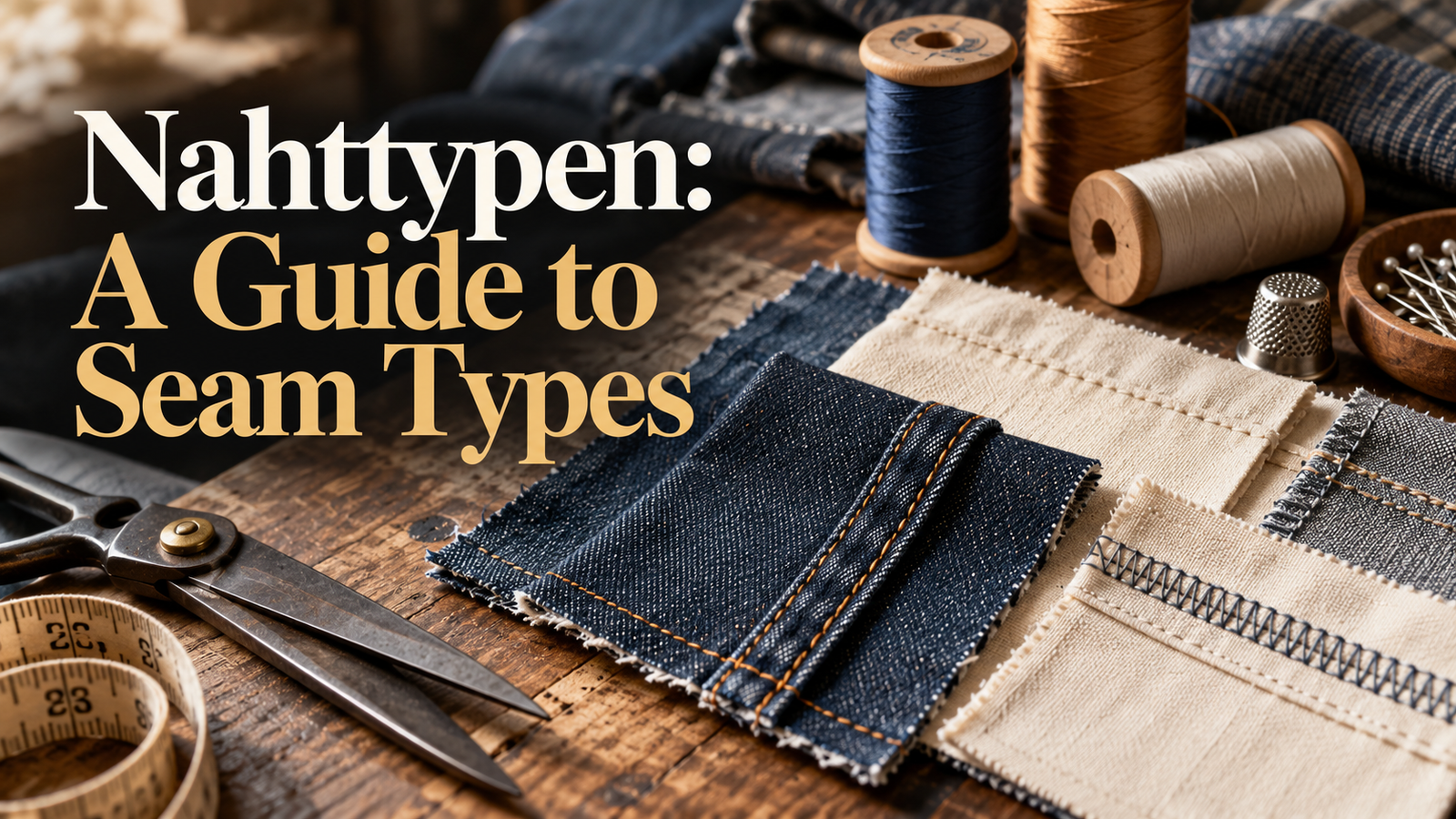
Nahttypen is German for seam types. In sewing, the term describes ways of joining or constructing material, while a stitch type describes how thread is formed through or around it.
The difference matters when reading a pattern, choosing a finish or discussing a garment with a manufacturer. Two seams can look similar from outside but have different internal constructions, and the same seam arrangement can be sewn with different stitches.
Nahttypen: Seam Type Versus Stitch Type
A seam concerns the arrangement and joining of material; a stitch concerns the thread formation. Coats’ seam-type guide and its basic stitch-type guide treat these as related but separate subjects. Describing one does not fully specify the other.
For a practical example, a fabric join needs a construction suitable for its purpose and stitching compatible with the material. When recording a sample, note both. A photograph of the outside alone may not show how the raw edges were handled.
Understand the Main Construction Families
Coats describes families including superimposed, lapped, bound and flat seams. In broad terms, these involve layering pieces, overlapping them, enclosing an edge with binding or joining edges with minimal bulk. The guide also covers edge finishing and decorative constructions.
These categories are useful vocabulary, but they are not a substitute for a pattern’s exact instructions. A finished garment can contain several constructions because different areas have different demands. Read the cross-section or construction diagram alongside the name.
Think About the Material and Intended Use
Start with what the item must do. Will the area stretch, carry a load, rub against skin or remain visible? Those questions help narrow the construction choices before you focus on appearance.
Then inspect the fabric itself. A thick sample and a fine sample may behave differently when folded into the same arrangement. For a project you are making, use offcuts to compare the actual result rather than relying only on a photograph of another fabric.
Why Thread Formation Also Matters
The AMANN industrial stitch guide explains stitch classifications and thread requirements. Its technical approach reinforces an important point: specifying a seam name is only part of describing a sewn construction. Thread formation and the machinery used also belong in the conversation.
When following a home-sewing pattern, check the machine settings and tools it recommends. Do not assume an industrial example can be reproduced identically with every domestic machine. If a construction is beyond the equipment you have, look for a pattern-approved alternative.
Make a Sample Before Sewing the Garment
Prepare a small sample using the same material layers and direction as the intended seam. Label the construction and settings so you can reproduce the version you prefer. Compare the outside, inside and any extra bulk at intersections.
Test the sample in a way that reflects the project: gently stretch a stretch area or inspect how a folded edge sits. Where the fabric permits it, compare a washed sample too. This is a practical trial, not a certification of strength or suitability for protective equipment.
Write a Clear Construction Note
A useful note includes the material, seam arrangement, stitch choice, edge treatment and anything learned from the sample. That is more informative than writing only “strong seam” or “neat finish.” Keep a labelled sample if the project will be repeated.
For another materials explainer, see our guide to Pappedeckel and cardboard terminology. Our CDiPhone explainer offers a different example of why identifying the exact meaning of a term comes before choosing a practical method.
Frequently Asked Questions
What does Nahttypen mean in English?
It means seam types, referring to different ways of constructing or joining material in sewing.
Is a seam the same as a stitch?
No. The seam describes the material arrangement; the stitch describes the thread formation.
Is one seam best for every garment?
No. Choose according to the material, intended use, pattern instructions and results from a suitable sample.
Should a beginner make a sample?
Yes. A labelled offcut test can reveal handling and bulk problems before the main garment is sewn.

1 Comment
Pingback: Jernsenger: Iron Beds, Sizes and Buying Checks